TestMasters LSAT Preparation

Unmatched Expertise
TestMasters founder Robin Singh has a world‑record twelve perfect LSAT scores and has personally taught over 10,000 students in live class settings. No one has a deeper understanding of the test or a more effective system for attacking it.
Amazing Resources
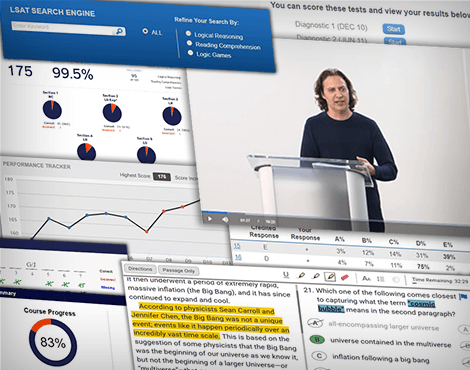
Our comprehensive LSAT prep materials are the product of decades of research and development. We work hard to give TestMasters students every possible advantage.
The Best Instructors
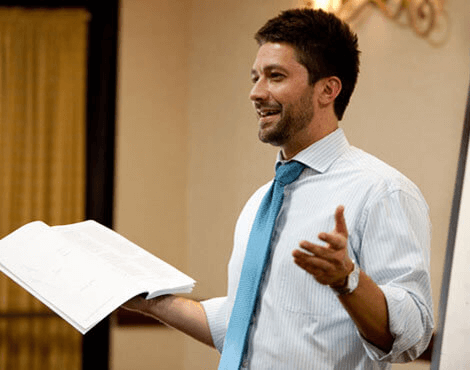
Through extensive screening, rigorous training, and excellent compensation, TestMasters has built the greatest LSAT faculty ever. Our teachers go above and beyond to help their students succeed.

Proven Success
In the past 35 years, TestMasters has helped hundreds of thousands of students achieve spectacular LSAT score increases.
TestMasters LSAT Course Reviews
| Hayden Curtis | Auburn | Before TestMasters 144 | After TestMasters 167 |
“Before using TestMasters, I tried two other study platforms, and neither of them came close to the level of structure and clarity that TestMasters provided. When I started the course, I had a 144 diagnostic and honestly didn’t think a huge jump was realistic. But by working through their materials I was able to improve all the way to a 167 on test day, which completely exceeded my expectations. I’m beyond grateful for all the resources and support I received.
Looking back, choosing TestMasters was one of the best investments I’ve made. The value has come back to me many times over in the form of law school scholarships, and I genuinely don’t think I would be in the same position without having taken this course.”
| Vincent Barnes | University of Florida | Before TestMasters 163 | After TestMasters 180 |
“When I started the TestMasters live online course I scored a 163 on my first diagnostic test. The expert guidance of my TestMasters instructor combined with the nearly endless study resources they provided, including thousands of questions and explanations, gave me what I needed to obtain a 17-point increase and a 180 on the real LSAT! TestMasters was instrumental in my journey to a perfect LSAT score of 180.”
| Mallika Balachandran | NYU | Before TestMasters 145 | After TestMasters 175 |
“Unlike other LSAT prep courses which try and teach tricks to answer LSAT questions or how to make your best guess, TestMasters teaches you how to find the correct answer every time. They teach you why that answer is right and every other answer is clearly wrong. They don’t take any shortcuts in their teaching methods and instead teach you how to think like the test writers. I loved going to my class and this made studying that much easier. My instructor not only took time to answer all of our questions, she encouraged us to challenge her thinking, until it was clear in all of our minds why the correct answer was correct. I ended up raising my score 30 points because TestMasters taught me how to think like the LSAT.”
| Susan Yaster | Johns Hopkins University | Before TestMasters 149 | After TestMasters 168 |
“I am a high school math teacher, and that means working incredibly long hours. The TestMasters self-paced online course gave me the flexibility to study with my busy schedule. The online system is very straightforward and easy to follow. After watching the videos accompanying a lesson (usually about three hours), I would then complete the homework. Only after completing the homework can you go on to the next lesson, which ensures accountability and focus. This course would have been hard for me to do in person, but the online system allowed me to break up the lessons into an hour here or there, instead of committing to three straight hours during busy workweeks. This flexibility was key.
Additionally, Robin Singh really gets to the heart of the exam. I felt like I understood every part of the test so well that I was not nervous about anything unexpected popping up on test day. Instead, I felt confident about my plan of attack, about the types of questions, about the format, and about the endurance needed to make it through the entire test. The studying and time that you put in at TestMasters will pay off.”
| Darren Pouliot | USC | Before TestMasters 159 | After TestMasters 178 |
“There are three ways in which TestMasters has created an immensely valuable course that rises above the competition. They offer unique and effective problem-solving strategies that enable you to be accurate and swift. They provide you with the best available materials specifically designed to teach, not just throw problem after problem at you. And they have the best instructors, who take the unique strategies and comprehensive materials, and set out to make sure you personally are understanding the concepts conveyed in the lessons. That combination cannot be beat.
Also, my instructor was phenomenal. He not only completely understands the test, but also knows how to explain difficult concepts in ways other people can understand. He’s taught so many people that he can anticipate where you might have a hard time, and goes the extra mile to individualize your preparation to make sure you understand everything. I could not have asked for a better instructor.”
| Tomas Kisielius | Georgetown | Before TestMasters 159 | After TestMasters 180 |
“The TestMasters course set me up to be primed and poised going into the LSAT. The class sessions provided clear demonstrations of how to approach different types of questions, and the homework and practice drills cemented these approaches. I found the video explanations of difficult review problems to be particularly helpful as I studied on my own, as they ensured that I always understood why I chose the wrong answer. My instructor, Anthony Meni, was an experienced teacher who consistently engaged with the class. He made an effort to know what was going on in the lives of students, which allowed him to give more personalized advice on studying. He always made himself available outside of class to answer questions, and this was especially helpful as I tried to schedule practice tests and review work optimally in the several weeks right before the LSAT. Most importantly, he instilled in me the mentality that should be used to approach the actual test, which helped me more than any amount of content review could have.”
| Phillip Turner | Henderson State University | Before TestMasters 142 | After TestMasters 164 |
“Taking the TestMasters class was probably the best decision I have ever made. Our teacher genuinely cared about us and devoted ample time to everything we studied. He also had a knack for knowing exactly how to explain hard concepts. And speaking of learning the concepts, this course had it all. All of the LSAT sections were covered in incredible detail with a foolproof way of mastering them.
The class is intense and we were given homework of biblical proportions. But the online videos with the step-by-step walkthrough with Robin Singh made it easy, and the entire online portal was simply amazing. It had comprehensive written and video breakdowns from Robin of individual questions and concepts, interactive and competitive vocab quizzes, a list of every type of flawed reasoning the LSAT has tested, and more. This is what makes the TestMasters system so solid. Only this course trains and gives you the best LSAT test takers as teachers, mountains of coursework with proven methods of success, and a members-only website filled with extra classes. TestMasters raised my score twenty-two points from a 142 to a 164! I just got my first full-ride letter in the mail yesterday and owe it all to TestMasters. I would recommend the course a hundred times over.”
| Gabriella Behar | Florida State | Before TestMasters 154 | After TestMasters 170 |
“I took the TestMasters course with Zac Wendroff from late May through early August. I wanted to take a moment to share how transformative this experience was for me and how grateful I am for both Zac and the TestMasters program as a whole.
I began the course with a 154 diagnostic score. After completing the program and continuing to apply the strategies Zac taught us, I earned a 170 on the September LSAT. I truly feel blessed and incredibly proud of that growth, and I know I would not have achieved it without the structure, discipline, and clarity that TestMasters provided.
Since taking the LSAT, I have been accepted to multiple T14 law schools, along with several full ride scholarship offers. Most recently, I was admitted to Harvard Law School, which I currently plan to attend. It still feels surreal to write that. I remember when Zac first asked our class where we hoped to go, and I was too nervous to even say Harvard out loud because I never thought it was possible. Being able to say it now is something I will never forget.”
| Matthew Sienkiewicz | University of Michigan | Before TestMasters 157 | After TestMasters 176 |
“My LSAT score redefined possibility. I ended up turning down schools that before TestMasters I had not even dared to dream of. With utterly no hesitance I am willing to say that TestMasters was essential to my success. There is no substitute for hard work, but without my instructor to effectively and thoroughly teach me the logical principles underlying the test, all the hard work in the world would have been for naught. While I cannot speak for other companies’ strategies for taking the LSAT, as I haven’t used them, TestMasters’ strategies work. I can think of no higher endorsement. TestMasters instills a firm grasp of all the necessary principles as well as effective test taking techniques, and, perhaps just as importantly, brings you into effectively structured contact with the entire available range of past test materials. As with hard work, there is no substitute for comprehensive exposure and that is exactly what TestMasters provides. If you are thinking at all of taking the LSAT, take TestMasters. It’s that simple.”
| Katherine McNamara | UCLA | Before TestMasters 142 | After TestMasters 162 |
“The TestMasters program and my in-class instructor Michael La Masse transformed my understanding of the LSAT in extremely important ways. I am grateful for the class structure and homework format as it kept me in check. I was always able to complete my homework before the next class and felt like it helped me going into the next lesson. Michael kept me engaged in class and went beyond expectations when answering my questions. He was encouraging, respectful, and straightforward in class. If I was confused with a particular explanation he was able to quickly pivot and explain things a new way. He could come up with applicable examples on the spot and keep the atmosphere positive. I would recommend TestMasters to anyone looking to take the LSAT!”
| Marissa Medine | Duke | Before TestMasters 161 | After TestMasters 176 |
“I thought I would dread going to LSAT class six hours a week all summer, but my TestMasters instructor, Anthony Meni, was so engaging and personable that the classes were always fun. He interacted with students as both an ally and coach, and his vested interest in our success was apparent from day one. Anthony was also incredibly approachable with respect to both substantive and test stress issues, never failing to offer a relevant example or compelling anecdote.
The TestMasters curriculum is well-structured and comprehensive. Their approach is deeply thoughtful and intensive; rather than just giving test-specific advice and surface-level tips, TestMasters taught me to really consider and interpret the concepts that underlie the LSAT. I’ve even found myself applying these logical principles in daily life, months after the test! Also, TestMasters offers the best in terms of preparatory materials. The quantity and organization of former test questions ensured that I had unending opportunities to practice. TestMasters also employs a tremendous array of online resources, from video lectures to topic-specific quizzes to performance trackers, which helped me keep up with the material after I had finished the live classes.
I honestly could not have asked for a better test preparation experience. TestMasters is the way to go for serious, motivated LSAT takers.”
| Nicole Foreman | University of Nevada-Reno | Before TestMasters 148 | After TestMasters 166 |
“I am so glad that I found the TestMasters program and used it to study for the LSAT. It taught me things I never would have been able to grasp through self-study with a limited background in logic/formal argument. Though rigorous and challenging, it is most definitely worth it. My final LSAT score was a 166, putting me in the 89th percentile and helping me receive two full-ride scholarship offers and several almost full-ride offers. I have already recommended the course to a colleague who was struggling with her LSAT studies. Right upon starting the course, she said she saw the questions in a whole new light. I have a lot for which to thank TestMasters.”
| Benjamin Faber | Washington University in St. Louis | Before TestMasters 163 | After TestMasters 177 |
“The TestMasters self-paced online LSAT course gave me all the tools I could have possibly needed to reach my full potential on the LSAT. The course was a perfect balance of working at my own pace and being held accountable. The required homework ensured that I got enough practice with each type of question, and the vast quantity of supplementary materials let me practice until I got the hang of things. Additionally, the course provided statistical insights into which types of questions I struggled with, which helped focus my studies on problem areas.
The most impressive part of the course was the helpful staff who provided personalized responses in minutes to any question I had. The LSAT can be a frustrating exam, and it is easy to get deterred when you don’t understand why a certain answer is correct. Getting help quickly was an incredibly beneficial aspect of the self-paced course, and it is clear that the team at TestMasters genuinely cares about their students.”
| Gabrielle Olivieri | Federal University of Rio de Janeiro | Before TestMasters 133 | After TestMasters 164 |
“Because of TestMasters’ incredible program and the dedication of my incredibly knowledgeable teacher, I had a score improvement of over 30 points and was accepted to top law schools such as George Washington, William & Mary, and the University of Minnesota, along with generous scholarship offers. Make no mistake, it takes lots of dedication and focus, but TestMasters prepares you step by step so that you can reach your goals. I would strongly recommend TestMasters to anyone who aims to get accepted to a reputable school.”
| Peyton Lee | Northwestern | Before TestMasters 166 | After TestMasters 180 |
“TestMasters was the best decision I could have made to prepare for the LSAT. Their method of breaking down question types and teaching strategies for approaching them was incredibly helpful and my instructor was awesome. The materials provided had everything I could possibly need to prepare and more real LSAT questions for practice than I could possibly finish. I recommend TestMasters to anyone who is serious about doing their best on the LSAT.”